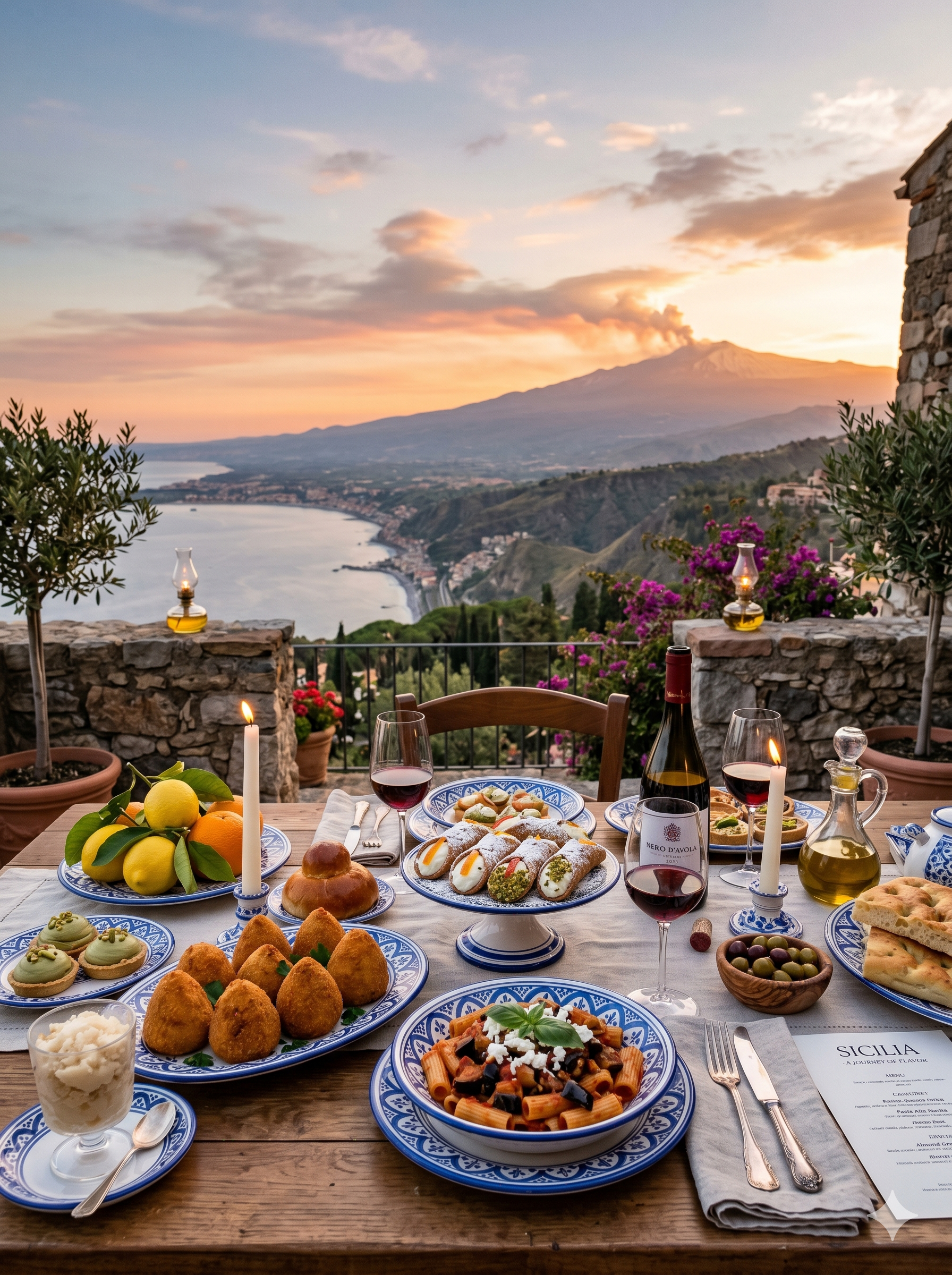
Sicily can be discovered through history, landscapes and traditions — but also through taste and aroma.
Sicilian cuisine is the result of centuries of cultural influences that shaped the island not only culturally, but also gastronomically. Greeks, Arabs, Normans and Spanish populations left traces that are still visible today in traditional recipes, local ingredients and culinary rituals passed down through generations.
Food in Sicily is not just nourishment. It is memory, identity and family tradition.
Sicilian Wines and Vineyard Traditions
Wine has been part of Sicilian culture since ancient Greek times. Thanks to the island’s climate and volcanic soil, Sicily produces a wide variety of wines known throughout the world.
Among the most famous is Nero d’Avola, one of the most representative Sicilian red wines, appreciated for its intense color and strong character.
Sicily is also home to many native grape varieties, including:
- Nerello Mascalese
- Frappato
- Catarratto
- Grillo
- Inzolia
Sweet wines also play an important role in Sicilian tradition, especially Marsala, Passito di Pantelleria, Malvasia and Zibibbo.
Across the island, wineries and wine resorts offer tasting experiences surrounded by vineyards, lava landscapes and countryside views.
Sicilian Desserts and Pastries
Sicilian pastry is one of the richest expressions of the island’s cultural heritage.
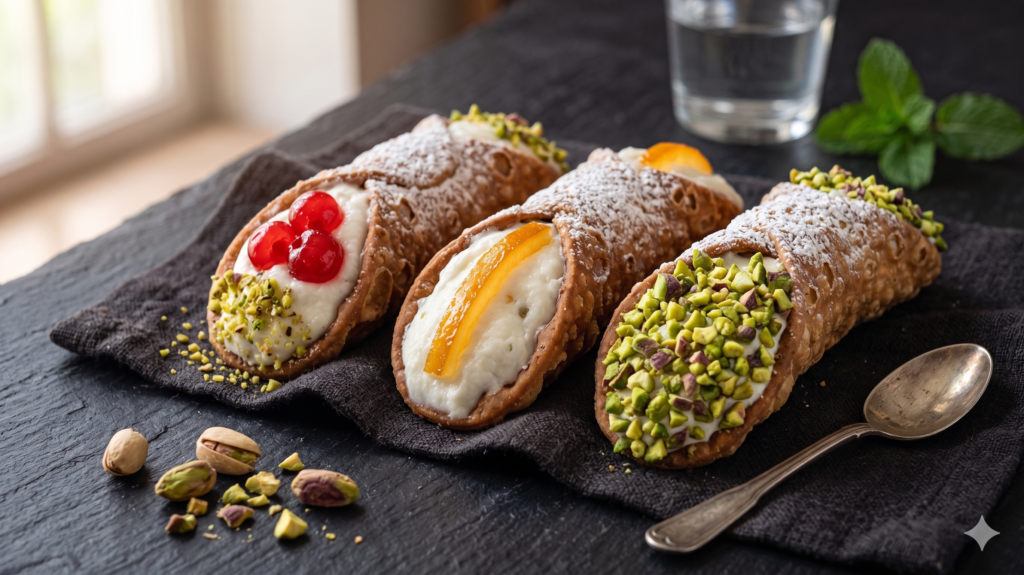
Among the most iconic desserts are the Sicilian cannolo and the cassata, both influenced by Arab culinary traditions and based on ingredients such as ricotta, almonds and candied fruit.
The famous granita is another essential experience, especially during summer. Traditionally served with brioche col tuppo, it comes in many flavors including almond, pistachio, lemon and chocolate.
Sicily is also famous for Modica chocolate, produced using an ancient cold-processing technique that gives it a unique grainy texture.
👉 Read also: The Sicilian Cannolo: History, Legends and Traditions of a Pastry Icon.
Sicilian Street Food
Street food is an essential part of everyday life in Sicily.
Unlike fast food culture, Sicilian street food is deeply connected to tradition and local identity.
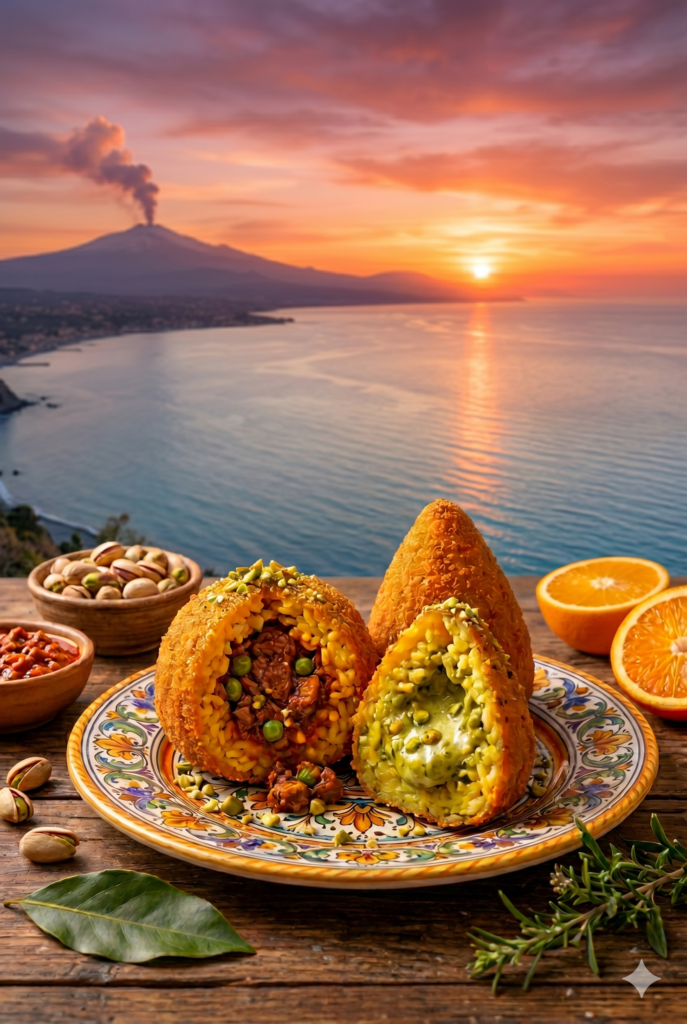
One of the most famous examples is the arancino — or arancina in Palermo — the iconic fried rice ball filled with ragù, butter, pistachio cream or other local ingredients.
👉 Read also: Authentic Sicilian Arancini: The Ultimate Guide to Sicily’s Famous Rice Balls
Other popular street foods include:
- Pane e panelle
- Pani ca meusa
- Cipollina
- Horse meat sandwiches in Catania
Street food in Sicily is informal, authentic and deeply social: often eaten standing outside small shops, food trucks or local bakeries.
Traditional Sicilian Pasta Dishes
Pasta traditions in Sicily date back to the Arab period, when dried pasta techniques spread across the island.
Today, Sicilian cuisine includes countless pasta dishes rooted in local traditions.
One of the most famous is Pasta alla Norma, made with tomato sauce, fried eggplant and salted ricotta cheese. The dish is linked to the opera Norma by Sicilian composer Vincenzo Bellini.
Seafood also plays a central role in Sicilian pasta culture. Pasta con le Sarde and sea urchin spaghetti are among the island’s best-known seafood recipes.
In western Sicily, couscous reflects the deep Arab influence still present in the Trapani area, especially during the famous Cous Cous Fest in San Vito Lo Capo.
Family Traditions and Slow Food Culture
In Sicily, food is strongly connected to family traditions and religious celebrations.
Recipes are often passed down from grandmothers to younger generations, preserving cooking methods and flavors that remain unchanged over time.
Traditional dishes are associated with specific seasons and festivities. During Christmas, for example, many Sicilian families prepare homemade scacciate filled with vegetables and local cheese.
This connection between food, memory and family identity is one of the reasons why Sicilian cuisine feels deeply authentic.
Food Experiences in Sicily
Exploring Sicilian food also means discovering local markets, wineries, countryside farms and traditional trattorias.
Across the island, visitors can experience:
- wine tastings
- cooking classes
- street food tours
- local markets
- traditional agriturismi
- artisanal pastry shops
These experiences allow travelers to discover Sicily through its flavors, traditions and local communities.
Final Thoughts
Sicilian cuisine is not just a collection of recipes.
It is the story of an island shaped by different cultures, landscapes and traditions over thousands of years.
Every province, every village and every family preserves its own flavors, ingredients and culinary rituals.
To discover Sicily through food means discovering the soul of the island itself.