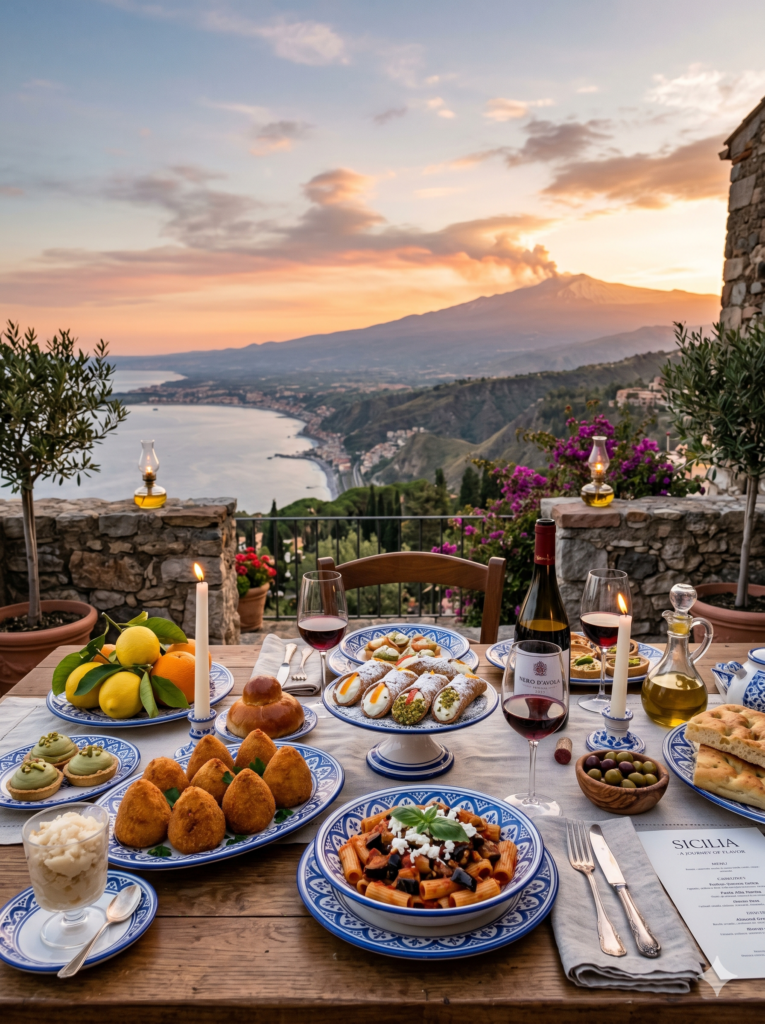
History has always been a tapestry woven from the stories of places, myths, names, and above all, the flavors that cross generations. To truly understand a culture, one must look at what graces its tables.
Today, we invite you on a sensory journey to discover the most universally acclaimed symbol of Sicilian gastronomy: authentic Sicilian arancini. These perfectly crisp, golden-fried Sicilian rice balls encapsulate an entire universe of flavor, tradition, and a legendary culinary debate that has passionately divided the island for centuries.
Named for its striking resemblance to a sun-ripened Mediterranean orange in both color and shape, this iconic delicacy is a masterpiece of street food. Yet, depending on where your footsteps land on our magical island, its very identity transforms.
Arancino vs. Arancina: The Eternal Sicilian Street Food Debate
To cross from the west to the east of Sicily is to cross a linguistic and cultural frontier. In the grand, baroque streets of Palermo, this golden delicacy is strictly feminine: the Arancina. Here, it is perfectly round, mirroring the fruit from which it draws its name.
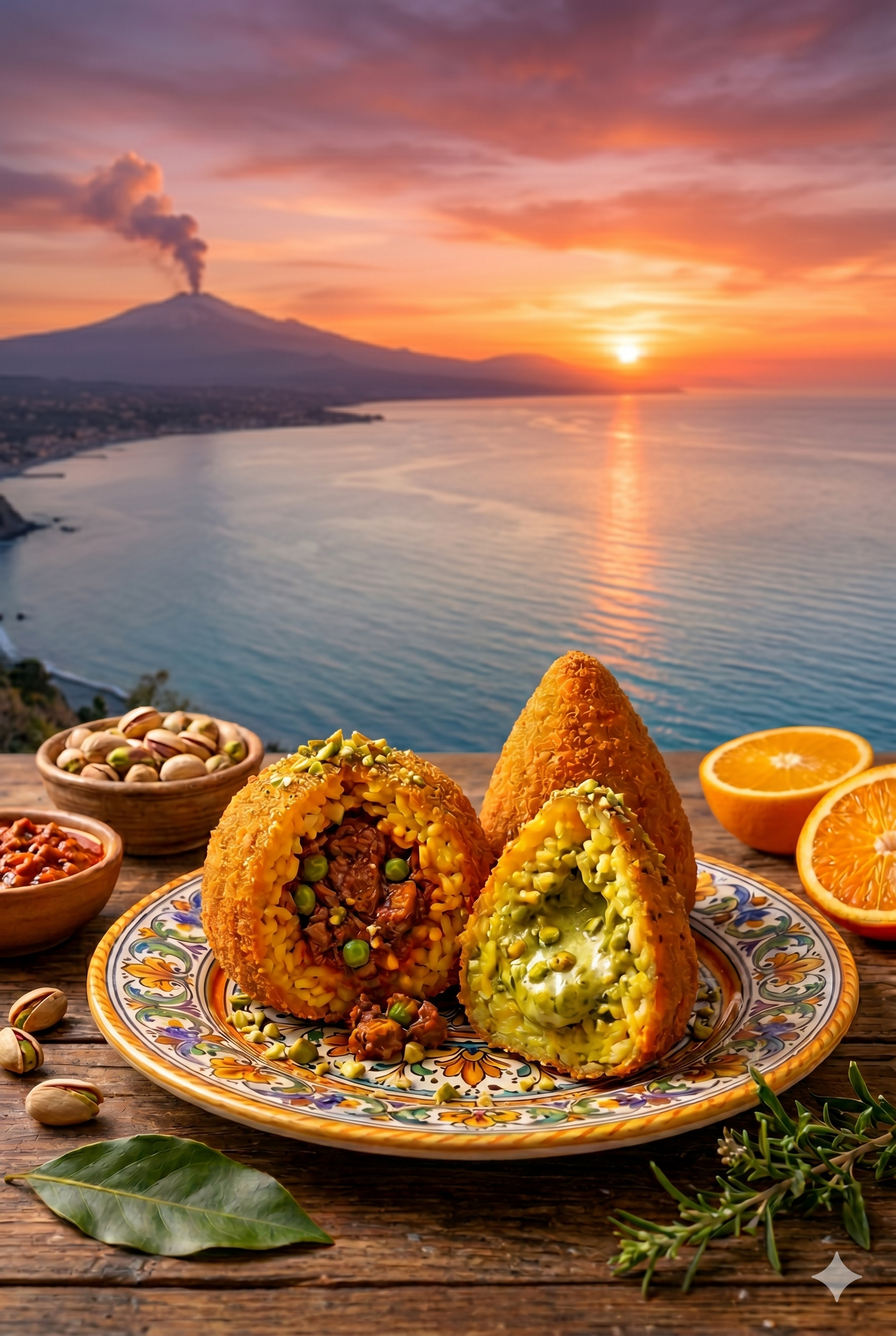
However, journey eastward toward the volcanic shadows of Mount Etna, and in Catania, it proudly becomes masculine: the Arancino. Often crafted into a conical shape to pay homage to the majestic volcano itself, locals will fiercely remind you that here, it is resolutely ‘masculu’.
Whether round or conical, feminine or masculine, this Sicilian street food is deeply woven into the fabric of daily life. It is the undisputed protagonist of local feast days, an essential comfort food, and a staple of high-end aperitifs and elegant happy hours across the region’s most exclusive resorts.
The History of Authentic Sicilian Arancini: Arab Roots and Saffron
To trace the origins of authentic Sicilian arancini is to step back into the golden age of Arab rule in Sicily during the 10th century. It was the Arabs who introduced the island to the exquisite combination of fragrant saffron-infused rice enriched with wild herbs and slow-cooked meats.
The true stroke of genius, however, came from the court of Emperor Frederick II. To allow hunters and travelers to carry this nutritious meal on long journeys without it spoiling, the rice was rolled into balls, coated in a delicate breading, and fried to a crisp. This ingenious outer crust acts as a natural seal, keeping the interior remarkably moist, rich, and piping hot—shattering open only when you take that first, unforgettable bite (or as we say locally, when you ‘muzzica’ it).
Traditional and Modern Flavors of Sicilian Rice Balls
While the timeless, classic arancino features a rich, slow-simmered meat ragù with peas and caciocavallo cheese, the boundless imagination of Sicilian chefs ensures an experience tailored to every sophisticated palate. Today, the world of Sicilian rice balls has evolved into a canvas for culinary innovation:
- Il Classico: Saffron rice enveloping a deeply savory, traditional meat ragù.
- Al Burro: A delicate, creamy filling of melted butter, mozzarella, and finely cured ham.
- Al Pistacchio: A gourmet masterpiece featuring the “Green Gold” of Bronte pistachios, offering a rich, nutty depth.
- Alla Norma: An homage to Catanese tradition, blending fried eggplants, rich tomato sauce, and salted ricotta.
- Le Avanguardie: Contemporary variations ranging from smoked salmon infusions to decadent, sweet versions filled with velvety Nutella.
The arancino is more than just street food; it is a versatile culinary chameleon that seamlessly adapts to every palate, offering a bite-sized mosaic of Sicily’s multi-layered history. On your next luxury escape with Magica Sicily, letting your senses guide you through this crispy, golden tradition is not just a meal—it is an initiation into the true soul of the Mediterranean.